Monday, January 19, 2009

Review – Dizmas (Dizmas)

It is somewhat surprising to see a former hard-rock band like Dizmas (emphasis on "former") release a semi-compilation, semi full-length album. Even more surprising is the fact that they have almost completely negated their heavy guitar-driven rock for more radio-friendly pop that bears a painfully striking resemblance to Jeremy Camp, Mark Schultz, Nichole Nordeman and a glut of other Christian pop-rock bands. Oh, Dizmas doesn't play this style badly, but the fact is that if I, or anyone else were listening to Christian radio, we would not be able to distinguish them from any other pop rock band. However, let's give them the benefit of the doubt, shall we?

Track Listing:

  1. Yours
  2. Play It Safe
  3. Save The Day
  4. Redemption, Passion, Glory
  5. Different
  6. Shake It Off
  7. Jealousy Hurts
  8. This Is A Warning
  9. Worth Fighting For
  10. Dance

Being a semi-compilation, there are 4 new songs, "Yours", "Save The Day", "Different" and "Worth Fighting For". The rest of the tracks are "some of Dizmas' most popular" although the fact that there are only 10 tracks hints that it was not that hard to pick them.

"Yours" is the first track off the album, and it is questionable as to why it is the opening track, because it is, to put it bluntly, bland. The cutting edge so apparent on their debut album, On A Search In America is not here, and the song itself is average, both lyrically and musically. The fact that Zach Zegan sings "Oh, I need a saviour" in the prechorus just screams cheesy Christian rock. Now, don't get me wrong here, I have nothing wrong with Christian rock or worshipful lyrics. I myself am a practicing Christian, and am firmly convicted that I do indeed need a saviour. However, this topic has been done SO many times before (I'm not kidding, research it yourself) and one has to wonder why Dizmas have not perhaps put their own spin on the subject matter. The song is not bad, but just too average to be worth listening to. "Play It Safe" ups the ante a little bit, and is thankfully a little bit catchier than its predecessor, experimenting with dance-rock and being driven by the rhythm section of the band. Sadly, in the entire album, the 4 new tracks are not standouts, and it is the old stagers such as "Redemption, Passion, Glory" and the aforementioned "Play It Safe". These two tracks also suffer from the overbearing lack of variety apparent in the album. There is no acoustic ballad at the end, nor is there a variation in the intensity of the songs. All of them are feel-good pop-rockers, which would be decent tunes on their own, but when clumped together have their glaring deficiencies magnified.

As a musical unit, Dizmas have not matured that much, unlike bands such as Mayday Parade and Anberlin. Although this is a semi-compilation, and therefore not a total departure from previous albums, there is sufficient evidence to suggest that Dizmas are quite content to sit on their laurels as a band, without striving for improvement. The band, consisting of Zach Zegan on lead vocals, his brother Josh on guitar, Jon Howard on guitar, Nick Aranda on bass and Clayton Hunt on drums, are reasonably proficient musicians, but their music lacks the cutting edge which would take them to the forefront of Christian music. Hunt does not hit the drums with any real conviction, despite the fact that he comes up with some pretty intuitive fills on songs like "Different". This lack of intensity on the drums may also be due to the production crew, spearheaded by Steve Wilson (Hawk Nelson). The crash and ride cymbals do not pierce through the wall of sound, and as a result create a muddy noise. This is also the case with the guitars, which sound muffled and don't carry any bite. The only instrument that does a decent overall job is the bass, which is bouncy on some songs and rich on others. Zach's vocals are not anything different from your usual post-hardcore fare, and overall the musical area of the album does not impress.

The lyrics do not fare much better. Most of the songs deal with fairly shallow subject matter, such as redemption by Jesus, the need for a saviour, celebration because of freedom, etc. These topics should be fine for people who just like to listen to music for the sake of it, but for those who like to delve deeper into it the lyrics are quite disappointing. Granted, deep Christian rock lyrics are not easy to create, but they are by no means impossible. And if the band (or the Zegans, rather) had taken the time to craft slightly less straightforward lyrics, the whole package might have been made more appealing due to the mystery effect. As it is, the lyrical simplicity compounds the plainness of the album. Add into the mix the somewhat monochromatic and rather uncreative front cover design and you have a fairly average album.

Because this is a compilation album, there is still hope for Dizmas. The four new tracks can be used as a platform to build bigger, better songs, because this band really has potential. However, if they continue in this sort of form, it won't be long before they go the way of so many other failed bands before them. In short, buy the 4 new songs on iTunes if you MUST hear them, but otherwise only buy the album if you are a diehard Dizmas fan. If you are just getting into them, you would be better off with
their previous release, Tension, or their debut On a Search in America. All in all, a disappointing effort from a band which really can play much better than this.

Rating :2.5/5

Ultimate Collection: Volume II – Hillsong

Another year, another compilation. Many seem to regard Hillsong Church's musical endeavours as nothing more than easy cash generating schemes. Especially after what happened with Mike Guglielmucci and his terminal "illness", the after-effect of which was the immediate removal of the song "Healer" from This Is Our God. While the whole driving worship anthem thing has gotten a bit tedious, there is no doubt that this collection represents the crème-de-la-creme of Hillsong's music for the past 5 or so years. Joel Houston and crew have created masterpieces such as "Mighty to Save", "The Stand" and "Salvation is here" over the years, and the compilation is more or less an accurate reflection of the church's musical quality, with a few questionable omissions.

Track Listing:

  1. Salvation Is Here
  2. The Freedom We Know
  3. From The Inside Out
  4. To the Ends Of The Earth
  5. Lord Of All
  6. Let Creation Sing
  7. Hallelujah
  8. Let Us Adore
  9. Came To My Rescue
  10. Take It All
  11. The Stand
  12. For All You've Done
  13. For Who You Are
  14. At The cross
  15. None But Jesus
  16. God He Reigns
  17. Mighty To Save

You can't really look at a compilation album as being an "album" per se, as the tracks weren't created with the idea of flowing together. Nevertheless, the audio editing duo of Tim Whincop and Steve Mcpherson do a decent job of melding the songs together into a sonically pleasing album. The blood starts pumping with the adrenaline rush of "Salvation is here" and "The Freedom We Know" at the start, then passionate renditions of favourites such as "From The Inside Out" and "To The Ends Of The Earth". One factor to note is that this album comprises "the very best live worship" (emphasis on the live). The band is able to draw on the raw power of a live performance while maintaining the tightness and musical cohesion most present on studio albums. Because it is a worship album, all the tracks are very notable for lifting the atmosphere to a very high place. This is evident on tracks like "From The Inside Out" and "Mighty To Save", especially on the penultimate choruses. The passion of the band and singers is evident. Another potent factor in favour of this compilation is the fact that "fast" songs are dispersed throughout the whole album, and not lumped together at the start, as is the case with many worship albums. Rather, they are placed where they are extremely effective, such as in the middle where a lull in passion might take place. "Take It All" and "For All You've Done" make sure that the worshippers keep at it. Overall, the track numbering and placing is efficient and quite smart, because these tracks were not created with the intention of being played sequentially.

The band remains tight throughout all the tracks on the album, exuding a sense of confidence without being overbearing. This is especially important on a worship record, as the focus is not on the performance but rather the atmosphere and how conducive it is to worshipping God. Guitar solos are kept to a minimum but the guitarists are masters at the craft of creating a worshipful atmosphere. Some cynics may argue that there is not much more to worship guitar than strumming repetitive chord progressions, but there is so much more than that. True, most of the chord progressions are rather simplistic, but therein lies the beauty of worship music. The guitarists can worship freely because they have the knowledge that the songs are ingrained in their hands and heads. As a result, they follow the worship leaders' signalling effectively and are able to bring the intensity down to the most minimalistic level, while also knowing when to up the ante and worship God with a passion. The bassist and drummer fill out the low end of the sound level admirably, and the drummer deserves special mention for being efficient but not boring in his choice of fills. He does not draw attention to himself, but complements the band and the vocalists well without overpowering them volume-wise, as drummers are capable of doing. The whole band is one of the best in the worship industry today, as is evidenced on "Mighty To Save", one of the classic worship songs of the past few years.

Lyrically, worship is not a very wide genre by nature. However, there is a relatively decent range of song topics here, ranging from pleas for spiritual change ("From The Inside Out"), celebration of emotional and spiritual freedom ("Salvation Is Here", "The Freedom We Know") adoration of God's creation ("Let Creation Sing") and gratefulness for salvation ("For All You've Done", "Came To My Rescue", etc.) Nothing beyond your usual worship fare, but it's effective for drawing people into the presence of God.

There's not much wrong with this disc. Most of the tracks are tracks that deserve their place in a "best of" Hillsong worship collection. However, it is questionable as to why tracks such as "The Freedom We Know" and "Came To My Rescue" were included, as opposed to "Hosanna", "Saviour King" and others. Many people believe "Hosanna" to be one of the finest tracks in years, but then again beauty is in the eye of the beholder. Joel Houston is proving to be one of the best worship leaders, on par even with Darlene Zschech. It will not surprise me to see Joel become one of the world's leading consultants on worship music, and I look forward to the future of Hillsong music. My recommendation? Buy it if you are just starting to get into Hillsong, because this is most of the best work of the last 5 years. If you have some of their CDs, though, you'd be better off buying your preferred tracks on iTunes. Of course, you could also just buy the disc if you fancy.

Rating:

4/5

Monday, December 1, 2008

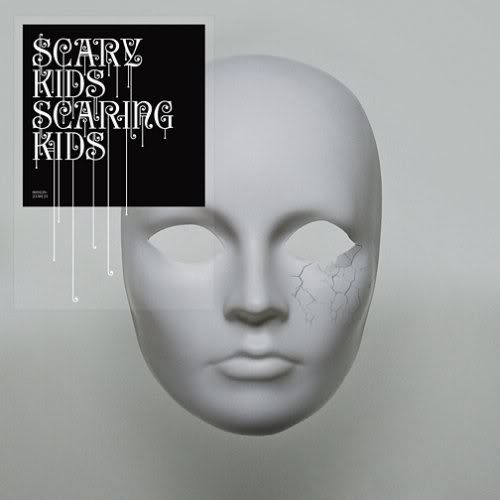
Review - Scary Kids Scaring Kids (Self-Titled)

Gilbert, Arizona. Sounds like some hick town out in the middle of nowhere, no? That description fits better than you think. Roughly 110,000 people is not a large demographic, but somehow a decent, nay, impressive band has risen up. Scary Kids Scaring Kids, named somewhat curiously after a song on a Cap'n Jazz album, did the hard yards at the start, organising car washes and various fundraisers to finance their debut EP, After Dark. They built a solid fanbase in their home city (bear in mind that they were still in high school when After Dark was released) and signed to Immortal Records, releasing their first full-length, The City Sleeps In Flames. While that album was hailed and the band given "high potential" status, they have unmistakably matured with the release of this self-titled LP. They are signed to RCA Records, after Immortal went belly up in 2007.

Scary Kids Scaring Kids is:

  • Tyson Stevens - Vocals
  • Pouyan Afkary - Keyboards
  • Chad Crawford - Guitar, Vocals
  • DJ Wilson - Bass
  • Steve Kirby - Guitar
  • James Ethridge - Drums

Track Listing:

  1. Prelude
  2. Degenerates
  3. Holding On
  4. The Deep End
  5. Faces
  6. A Pistol To My Temple
  7. Star Crossed
  8. Derailed
  9. Breathe
  10. Set Sail
  11. Free Again
  12. Snake Devil
  13. Watch Me Bleed
  14. Goes Without Saying
  15. Blood Runs Forever
  16. The Power Of Resolution

Opening tracks tread a very delicate line. They can soften the listener up, creating a more favourable impression of the album, or they can make the listener cringe in agony and press the eject button. While there have been several opening tracks that have done the former, there are sadly many more that accomplish the latter all too easily. Prelude, while not being a masterpiece per se (it's only 40 seconds long) does create a dark and foreboding tone. A voice in the background rants about pollution and the like, while in the foreground someone appears to be running and panting heavily, knocking frantically on doors, apparently seeking an escape. This eventually climaxes with the smashing of glass, indicating the conclusion of the matter in a (presumably) grotesque manner. Degenerates takes over, then, and immediately the full aggression of the band is revealed. Vocalist Tyson Stevens showcases his ability to be angry without screaming. An impressive feature throughout this song and the whole album is the tightness of the rhythm section. The bass drum and bass guitar are connected perfectly, particularly when drummer James Ethridge uses his double kick pedal. Holding On is another passionate track, Stevens' voice impassioned as he moans about his attempts to "hold on" to a woman. The rhythm takes a back seat here, leaving the twin guitars to take centre stage. As is the case with many post-hardcore bands, the guitarists have learned to play off each other. There is no lead or rhythm guitarist, as both Chad Crawford and Steven Kirby switch between these roles effectively. The Deep End continues in pretty much the same vein, another passionate power ballad in which the guitars really flourish. The lead single finally arrives in Faces, which is the first real fist-pumping mosh pit song on the album. It is arguably the best choice for a single, with lyrics speaking about revolution and breaking free of restrictions, to put it in a nutshell. The musicality is top-notch, and Pouyan Afkary manages to add intricate keyboard fills on top of the driving sound created by the band. The next track in this "bracket" is A Pistol To My Temple, which involves the first real use of screaming. It retains a resemblance to the other tracks, but is still excellent and catchy. Derailed and Breathe can't really be called "songs", and they appear to be, while pleasant to listen to, merely filler. The remainder of the album continues the high standard set by the first bracket. Standout tracks include "Snake Devil", which verges on glam-metal and is a fun track, and "Free Again", which again speaks about revolution. Special mentions should go to the acoustic ballads, like "Watch Me Bleed" and "Set Sail". They provide a welcome respite from the high-octane rock, but allow for the rock to resume almost immediately.

The band has taken many strides musically since their debut LP. Stevens was criticised for screaming too much on that album, and the instrumentalists were, while impressive, not outstanding. They have completely eradicated those preconceptions with this album. Screaming has very much taken a back seat, although Stevens uses it tactfully in songs such as "Free Again" and "Snake Devil". The band have stepped up in terms of understanding each other. The guitarists switch soloing duty at will, and Afkary inserts the uniqueness of his keyboard skills without ruining the overall chemistry of the sound. Ethridge has developed the wisdom of knowing when and when not to play complicated fills. When he does play them, though, they are quite impressive. As stated above, he clicks extremely well with Wilson on the bass, and they provide the strong undercurrent upon which the rest of the band runs.

Despite the overall success of this album, there are a few niggling issues that prevent it from being a classic. One is the reliance on ¾, 3/8 or related time signatures (i.e. 6/8) in songs, or at least their choruses. "Degenerates", "Holding On', "The Deep End", "A Pistol To My Temple", "Star Crossed" and "Blood Runs Forever" all use the aforementioned time signatures in at least the choruses, and in many cases the complete songs. While the mainstream public may not care or pick up on this, there needs to be more variety in the rhythm. It would have been nice to have more songs like "Snake Devil", for instance. Maybe even a jazz-rock improvisation, who knows? Another issue is lyrical complexity. It is true that the band has become more proficient musically, but lyrically there can be some improvement. It is extremely similar to their previous effort, with a lot of emphasis on revolution ("Faces", "Free Again") and relationships ("Snake Devil", "Holding On", etc.). This does work, but perhaps the inclusion of more social commentary or a broader range of experiences might have been in order. Then again, these are not HUGE issues, merely slight chinks in the armour.

Overall, this is an impressive sophomore effort from SKSK. They manage to find the middle ground between hardcore and melodic, and keep the scales fairly balanced.

Recommended to fans of: Thursday, Thrice, As I Lay Dying, Dance Gavin Dance, Saosin, Chiodos, Silverstein

Rating:

4/5

Sunday, October 26, 2008

Review – New Surrender (Anberlin, 2008)


Well, I wasn't expecting it this quickly. The trend in this digitised era is for bands to wait at least 2 years between releases, leaving fans drooling for more. Not the case with Anberlin, though. New Surrender is released on the back of the band's critically acclaimed 2007 record, Cities. Many fans raised questions over Anberlin's decision to move over to Universal Republic Records and ditch the producer of their last 3 albums, Aaron Sprinkle, for Neal Avron, who's credentials include Yellowcard and Fall Out Boy (Yuck!). The fears were that the signature Anberlin sound would become lost in the muddled chaos that is mainstream rock music. However, while implementing a poppy edge to their music, New Surrender still possesses all the Anberlin characteristics: massive guitars, synthesisers, and soaring vocals. Does it live up to Cities, though?

Track Listing:

  1. The Resistance
  2. Breaking
  3. Blame Me! Blame Me!
  4. Retrace
  5. Feel Good Drag
  6. Disappear
  7. Breathe
  8. Burn Out Brighter (Northern Lights)
  9. Younglife
  10. Haight St.
  11. Soft Skeletons
  12. Miserabile Visu (Ex Malo Bonum)

New Surrender forgoes the use of a debut track, as was used in Cities, choosing to dive straight into the guitar-driven composition that is The Resistance. Ambitious and powerful, it is arguably as good an opening track as on any of the Anberlin albums, if not the best. Christian's vocals reach to the skies, infused with passion and raw anger. The next track, Breaking, is sort of a conglomerate of the songs Adelaide and A Whisper and A Clamour from Cities. Bouncy and poppy like Adelaide, but possessing the vast stadium rock sound of Clamour, it is quite likely to be used as the second single. Once again, Christian's voice does not fail, tender and powerful at the same time. The lyrics are also poignant, offering some consolation to the broken-hearted: "You make breaking hearts look so easy, seems like you've done this before". Blame Me! Blame Me! ups the ante with a fun dance-rock beat, sure to get listeners upbeat. Another highlight of this album, sure to impress.

The first single off the album (and some might argue that it was inappropriately chosen) is Feel Good Drag, re-recorded from the band's 2005 release, Never Take Friendship Personal. The band chose this song as the single because they felt that it did not get the attention it deserved originally. (Probably because that album was slightly monotonous, but let that remain a discussion for another time). And I must agree, the re-recorded version possesses much more power and aggression, largely due to the improvements in Christian's voice. Even with the omission of the screaming part in the bridge, Christian manages to make the song more of a hardcore sing-a-long, air guitar style tune. Not a bad technique for a single, I must say. It will be extremely surprising if this single does not at least do moderately well on the Alternative Rock charts.

The rest of the album is very introspective, both in terms of lyrics and musicality. Breathe brings back reminiscent thoughts of a Joshua Tree – style U2, and is sure to be a big hit with fans. Soft Skeletons is no doubt one of the darkest songs Anberlin has every written, Christian at his most vulnerable as he croons about a girl caught in the hold of drugs. Younglife and Haight Street are the two weakest songs on the album, and could even be considered filler. However, by today's standards they are still decent songs, certainly not bad like some of the stuff on the radio. (Lady GaGa, anyone?) However, the magnum opus of this album has to be the epic ending song, Miserabile Visu (Ex Malo Bonum). Translating literally as "Evil from a wretched sight (Good out of Evil)", it is apocalyptic, bombastic, grand and..... well, epic. Littered with Biblical references to the apocalypse, this is sure to provoke study from the curious intellectuals out there. A sample of the lyrics is as follows : "Before the red priest took his last breath, he told me child now don't forget, the sky will turn dark very soon, your days are numbered when there's blood on the moon". Dark and brooding, the song is enveloped (for the first two verses, at least) by an eerie atmospheric guitar effect, a testimony to the skill of Avron in production (much as I hate to admit it) and Milligan on his guitar. As the song enters the 2nd chorus, though, the band kicks into top gear, creating a powerful arena sound that adds to the epic feeling. One of the great Anberlin songs, and one I would ask you to listen to if you were to listen to one track on this album. Bonum will never live up to the closing track from Cities, *fin, as that was one of the masterpieces of 21st century alternative rock. However, it does not seem apparent that Miserabile Visu (Ex Malo Bonum) tries to go that way. It forges its own path, and the same could be said of the whole album.

The band remains as tight and as musically proficient as ever before, with new guitarist Christian McAlhaney slotting perfectly into his role as partner to lead guitarist Joseph Milligan. Rexroat is the quiet achiever on his bass, pounding out those bass lines without being flamboyant or flashy. Meanwhile, Nathan Young has tweaked his impressive drumming style, hitting the skins with muscle and aggression, while adding to the atmosphere on more emotional songs. As has been mentioned, Stephen Christian's voice is one of the most unique in the market today, and he utilises it brilliantly to complement Anberlin's style. One thing noticeable about Anberlin is the way that they work as a unit. Sure, there are guitar solos, but these do not glorify Milligan or McAlhaney, but present more opportunities for the rest of the band to work together. No one member towers over the other in their songs, and everyone is content to play as one, rather than individually. The term "A champion team will beat a team of champions" comes to mind, no?

Poppy? A bit. Poignant? Yes. Brilliantly constructed? Yes. Anberlin were never going to make another Cities (I can imagine the disappointed grunts, but that's the truth). What it has done is construct its most sonically diverse record yet, and this is not a bad thing at all. In my opinion, this album is every bit as good as Cities, if not the same stylistically. It will not create such a splash, on account of the fact that expectations are sky high (as they should be) and the fact that they have joined Universal Republic. I prefer to look at this as good, because then more people will hear the genius that is Anberlin. Listen to New Surrender. You will not regret it.

4.5/5

Tuesday, September 30, 2008

Review – The Flame In All Of Us (Thousand Foot Krutch)


Back after a 2 year absence, Canada-based Thousand Foot Krutch (Trevor McNevan – vocals, Joel Bruyere – bass, Steve Augustine – drums) attempts to relaunch itself into the spotlight with The Flame In All Of Us. Going on the success of 2003's hit album Phenomenon, and to a lesser extent 2005's The Art of Breaking, it seems that the band is poised to break into the mainstream. And that is certainly the impression one gets of the album. Everything about it, from the squeaky clean production to the removal of rap elements and less hardcore stylistic tendencies, and even to the simplistic album artwork, screams major label intrusion. Nevertheless, the band is still signed to Tooth & Nail, which is a fantastic label in my opinion, in terms of discovering and nurturing new talent in the rock scene. Getting down to business, The Flame In All Of Us is a solid album, with heavy rock riffs and tender ballads that will no doubt hit home with the mainstream rock audience.

Track Listing

  1. The Flame In All Of Us
  2. Falls Apart
  3. New Drug
  4. What Do We Know?
  5. Favourite Disease
  6. My Home
  7. My Own Enemy
  8. Learn To Breathe
  9. Inhuman
  10. Broken Wing
  11. The Safest Place
  12. Wish You Well

I've seen a variety of bands which use the title track of the album as a single. To me, the whole notion of a title track is distorted, because the title of the album should reflect the overall theme, not just a single track (while that may not be the case with a lot of albums, a title track immediately draws unnecessary attention to itself while not necessarily being better than the other tracks on the album). Naturally, this is a single opinion, and should not be taken as fact, but evidence is found in numerous albums. Anyway, back to the album. Despite being the title track and the first single, The Flame In All Of Us manages to rock out with a riff that will immediately insinuate itself into your brain. Strings are used in the chorus and contrast decently with the hard rocking verse. This is one song that you will either love or hate, and it will either seem repetitive or strike you as a piece of rocking genius. The title track leads immediately into the first single, "Falls Apart". Hard-hitting and fairly poignant in terms of lyrics, it is a bouncy, head-banging song that you will also either love or hate for its repetitive chorus and heavy guitars. The good work of both these tracks is undone to a degree by "New Drug", which tries hard to be a metal-sounding track but ultimately fails. "What Do We Know", the second single, redeems the album somewhat, showcasing the band's softer side and its ability to commentate on the social status of the planet. It is probably the single that will be the most successful on the radio, because of its ballad style and the use of the children's choir, which will be lapped up by listeners. The rest of the album throws up notable highlights such as the string-heavy rocker "Learn to Breathe" and the bass-driven nu-metal of "The Safest Place", which is in my opinion one of, if not the best track on the album. "Wish You Well" is a fitting end to the album, and the added bonus of the hidden track "The Last Song" is one that will pull in listeners.

I cannot fault the band musically. They sound extremely tight together, even with the lack of a permanent guitarist (Phil X recorded the guitar parts for the entire album). This is probably due to the fact that the producer encouraged the band to record with each other, infusing the tracks with more energy than would be the case if the parts had been recorded separately. The bass fills out the low end well, and the drums are simple yet effective. In the mix of the rock goodness, though, I kept having the nagging feeling of "Haven't I heard this before?". Don't get me wrong, the album is good, but it sacrifices the limp traces of originality that were present on the band's previous albums. TFK would have done better to insert more rap and cut back on the mainstream rock style, maybe sacrificing album sales but in the process sanctifying and fine-tuning their style. The Flame In All Of Us will sell copies, and sell them by the bucket load. However, I just sense that if McNevan, Bruyere and Augustine want to make a bigger impact, they will have to come up with something more unique with their follow-up, or revert back to Phenomenon-style nu-metal.

The lyrics are solid and spiritually refreshing, without being too oppressive and in-your-face. Even the aggressive songs manage to strike a reasonably decent balance between raw passion and angst ("The Safest Place" and "Learn To Breathe" come to mind). Also, this album is accessible by both Christian and secular audiences alike, despite the labelling of TFK as a "Christian band", a label which so many bands try to shrug (And I totally support them). TFK do not refer directly to "God" in any of their songs, although there are veiled religious and spiritual references. None of these should deter any listeners away, though.

There are one or two songs that are major flops on this album. "Inhuman" is a failure in every sense of the word. McNevan tries to market the song as "a crunchy rawk anthem", but really it the only sound it remotely resembles is a cacophony of screeching, painful guitar and crackling, unclear bass. Even the lyrics are not able to save the song. "I'm alive because you touched me" is so ridiculously cliched that all it does is make me want to manually delete the track from the disc. Oh, sure, some TFK fans may wail at me for being narrow-minded and not open to TFK's alternative style, but the truth is that "Inhuman" simply fails to complement the other decent rock tunes on the album. "My Own Enemy" succeeds more in this aspect, as it sounds a lot tighter than "Inhuman". However, it still seems to be lacking in the "it" factor that so often separates good bands from great bands, diamonds in the rough from run-of-the-mill albums.

I could say that about the whole album, as a matter of fact. Satisfying as it felt, there was nothing that the band has done a whole lot better than other bands of the same genre (Nickelback, Korn, Creed). I would have liked to see them go for broke and try to reinvent the wheel (figuratively speaking), rather than create hard-rock tunes reminiscent of other bands before them. Regardless, this is an improvement over The Art Of Breaking, and I look forward to the next installment in the Thousand Foot Krutch story.

Rating :3.5/5

-Josh Yuvaraj

Monday, September 22, 2008

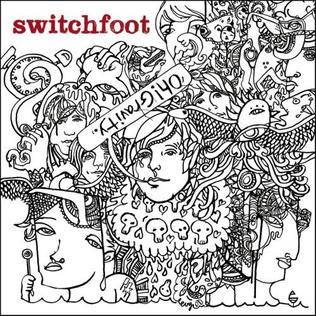
Review – Oh! Gravity (Switchfoot)


Since forming as the three-piece indie rock band Chin Up in 1997, Switchfoot have gone from strength to strength. Initially consisting of Jonathan Foreman on guitar/vocals, his brother Tim on bass and their friend Chad Butler on the drums, the band released three independent albums, in chronological order : The Legend of Chin (1997), New Way To Be Human (1999), and Learning To Breathe (2000). All three were praised for managing to produce catchy pop tunes, while maintaining a sense of spirituality and nobility about them in terms of lyrics. Of course, the critical reception of these albums paled quite significantly in comparison to the sort received by their 2003 mainstream debut, The Beautiful Letdown. Poignant, poppy ear candy, it was exactly what was needed in the mainstream music market. Propelled by the smash hits "Meant to Live" and "Dare You To Move", Switchfoot quickly became a household name, with their follow-up Nothing Is Sound debuting at No. 3 on the Billboard 200 in 2005. Needless to say, it was never going to live up to Letdown in terms of hit singles, but was a decent record in its own. And so here we are, looking back at the latter end of 2006, when Switchfoot released Oh! Gravity. Let's dive in, shall we?

Track Listing:

  1. Oh! Gravity
  2. American Dream
  3. Dirty Second Hands
  4. Awakening
  5. Circles
  6. Amateur Lovers
  7. Faust, Midas & Myself
  8. Head Over Heels (In This Life)
  9. Yesterdays
  10. Burn Out Bright
  11. 4:12
  12. Let Your Love Be Strong

While it certainly isn't fair to call Nothing Is Sound a flop, by any stretch of the imagination, it certainly didn't have the impact many thought it would. With Oh! Gravity, Switchfoot seeks to go back to their more raw, indie roots. The distinction between this album and the previous two is certainly significant, because on the whole Gravity sounds a lot rougher and less polished than The Beautiful Letdown or Nothing Is Sound. The first song, which is also the title track and the first single off the album, is a frenzied mélange of driving guitars, a thumping bass line and frenetic pounding on the drums courtesy of Butler. While it may not appease the mainstream audience as much as "Meant To Live" or "Dare You To Move", it is certainly a fun, bouncy track to begin the album with and an indication of the stylistic departure initiated by Foreman. The next track, "American Dream", continues the mood, with a solid rock verse backed by a fist pumping chorus (It is nigh impossible to refrain from shouting "This ain't my American Dream!" when hearing it). Listeners hoping for more of the same will be somewhat disappointed, though, because "Dirty Second Hands" certainly catches everyone by surprise. Starting off with an alt-country guitar riff, the rest of the band clicks in, albeit in a slightly eerie manner. The fact that this was chosen as the second single also underlines the point that Switchfoot want to broaden their sonic wingspan. Not everyone's cup of tea, but it actually is a decent enough song in terms of technicality and catchiness. Normality is slightly restored with the passionate anthem "Awakening", which is unsurprisingly the next single. This song is probably the most likely tune to score on mainstream radio, and has already reached upwards of 2 million hits on YouTube. The rest of the album also produces notable highlights, such as the enthralling tale of "Faust, Midas & Myself", in which a man debates the devil's offer of material gain in exchange for his soul, and the R.E.M.-esque tone of 4:12 (The song also ends on four minutes and twelve seconds. Coincidence? Who knows?). Stylistic departure has been achieved in this album, and while it will not score highly in terms of pop hits, it certainly does in risk-taking.

All five members of the band – The initial three and Jerome Fontamillas (guitar/keys/vocals) and Drew Shirley (guitar) – are musical adepts. Therefore, the technical ability on this record is of an immensely high level. The three guitarists play simultaneously on a fair number of occasions, and they are quite skilful in layering the sound so as to prevent the "wall of noise" effect. Fontamillas chimes in with keyboard flourishes now and again, which add to the exotic flavour of this album. Meanwhile, Tim Foreman and Butler are reliable as ever on the bass and drums, Tim accenting the guitars well (while chiming in with a few of his own bass licks) and Butler pounding the skins with tight technical ability. One example is "Awakening", with Butler's snare fill in the bridge and Tim's bass being emphasised in the second verse, while in the choruses the guitars sound loud but clean, heavy but not overbearing. In terms of vocals, Foreman soars more than ever before, hitting those high notes with conviction and power while managing to impart a sense of tenderness and vulnerability on softer tunes. Vocal harmonies have taken a back seat on this album, but Tim reliably provides them when needed.

Producers John Fields and Steve Lillywhite have done well in co-operation with Switchfoot, and the collaboration meant that Switchfoot was able to impose more of their ideas on the album. Foreman explicitly stated that he wanted to leave certain mistakes in, and that some songs were full band recordings, rather than individual drum and guitar tracks amalgamated together. This all contributes to the roughness and grungy feel of the album.

Possibly the only aspect of the album which has remained fairly unchanged from previous albums is lyrical themes. Switchfoot always seems to veer onto the track of despising materialism and "wanting more in this life". Their 2003 single "Meant To Live" showcases this, Foreman singing, "We were meant to live for so much more, have we lost ourselves". It is essentially the same theme on Oh! Gravity, but with more words coating it. The theme is at its most blatant in "American Dream", when Foreman basically repeats "Gone" off The Beautiful Letdown, singing "This ain't my American dream, I wanna live and die for bigger things". He even goes so far as to reference Lexus cars, in the same vein as "Gone". Other examples include "Dirty Second Hands", which attempts to induce the listener to go against the flow of time and make the most of their lives, and "Burn Out Bright", which essentially says the same thing ("If you've only got one shot, If you've only got one life, If time was never on our side, then before I die I wanna burn out bright"). Foreman should have expanded his lyrical horizon not unlike what he and the band did with the style of this album, and I would have liked to have seen lyrics dealing with topics such as suicide and failed relationships. There are some glimpses of a broadening range on songs such as "Yesterdays", which fondly reminisces about the life of a deceased loved one and "Head Over Heels (In This Life)", a groovy ballad about a lover/friend.

This is a solid album from a great band, and a good follow-up to Nothing Is Sound, which felt just a little overpolished and overproduced. With Oh! Gravity, Switchfoot manages to capture the raw energy which so often encapsulates their live shows but does so with technicality which is decent. The lyrics are the only glaring blemish, but otherwise it is a good album. Not excellent, but good and I hope to see much better in their next album, because this band is one of the successes of the last ten years.

Verdict : 3.75/5

-Josh Yuvaraj

Sunday, September 21, 2008

Review – Deliverance (Quietdrive)


Another band classified as pop punk here. Quietdrive made a minor splash on the charts with their 2006 debut, When All That's Left Is You, although most of their mainstream recognition so far has been due to their cover of Cyndi Lauper's popular 80's pop hit Time After Time (It's actually an alright cover, go check it out sometime). With Deliverance, the band – consisting of Kevin Truckenmiller (vocals), Matt Kirby (guitar, vocals), Justin Bonhiver (guitar), Droo Hastings (bass) and Brandon Lanier (drums) – seeks to expand its stylistic conventions to sound like more than what the average pop-punk band sounds like. And it's fair to say that they actually manage to achieve their goal, because Deliverance ranges from guitar driven hard-rockers to passionate power ballads to Beatle-esque 60's pop and even a bit of doo-wop not unlike Little Red.

Track Listing

  1. Believe
  2. Deliverance
  3. Daddy's Little Girl
  4. Motivation
  5. Birthday
  6. Afterall
  7. Pretend
  8. Hollywood
  9. Kissing Your Lips
  10. Take Me Now
  11. Promise Me Now
  12. Secret
  13. Starbright

When All That's Left Of You was your average pop-punk album, lyrics about girls, two four rhythms, repetitive chord progressions, all the stuff I mentioned in the We The Kings review. I have to say that I started listening to Deliverance with an attitude of "Oh gosh, not another pop-punk album". I also have to say that I have been pleasantly surprised by the range of styles present on the selection of songs. Album starter "Believe" starts off with a man's muttering voice and Lanier's bouncy drums, followed by the rest of the band kicking into gear and forming into a solid, non-generic rocker (There's even a synth solo in the bridge). The second song is the title track, and probably the first single. Appropriate, because it is arguably the most pop-sounding tune on the album. Not necessarily as heavy as the others, but it is a quality song that should garner a fair bit of airplay on mainstream, or at least alternative radio (Maybe a repeat slot on MTV? Who knows). Other standout tracks include "Daddy's Little Girl", a passionate power ballad tinged with exotic classical guitar flourishes, "Hollywood", which advertises a playful R'n'B styled rhythm, and "Secret", with its Latin-American/Spanish roots and classical guitar.

The musicality of this band was debatable at best on their debut. The drums sounded a bit overused, and when added to the muddy guitar produced a sound that wasn't particularly pleasing to the ear. However, most of the flaws have been eradicated on Deliverance. Bonhiver and Kirby exchange their guitar parts well, and both of them when playing rhythm guitar click in a pleasing fashion with Hastings and Lanier. Speaking of those two, I really have to comment on the communication and understanding between them. Hastings' bass is nearly always accented in just the right spot by Lanier's bass drum, and this is apparent on songs such as "Hollywood" and "Pretend". Obviously skeptics will argue that this communication is always apparent on rock albums because of the need for perfection and the adeptness of producers at eliminating mistakes. However, it is actually very recognisable from the moment the album starts playing, and one has to wonder whether the producer intended for this effect to be created. Regardless, it works well and complements the technique of the band. Vocals-wise, Truckenmiller enhances the uniqueness of his voice to emphasise the band's move away from generic punk into more alternative territory. He goes hard on tracks like "Believe" and "Birthday", while managing to showcase his emotional side on "Daddy's Little Girl" and "Secret". The vocal harmonies are also top-notch, adding to Truckenmiller's voice and complementing the rhythm section of the band.

The album doesn't stray enough from pop-punk conventions to be declared revolutionary (lyrics-wise), but it does go deeper than usual in terms of ambiguity and interpretational value. "Daddy's Little Girl" (I know I've referred to it a lot, but it truly is a great song) could be interpreted from viewpoint of a sugar daddy, and actual father, or a boyfriend, completely up to the listener. Likewise, "Hollywood" can be taken as someone's obsession with the location, or with a girl with the metaphorical name of Hollywood. There are other examples, but I will skip them for the sake of boring you, the readers. There are still traces of the old pop-punk Quietdrive, songs such as "Birthday" - which involves a man moaning about his girlfriend leaving him, possibly because he forgot her birthday – and "Take Me Now" just two examples of songs with average lyrical matter.

One aspect that really caught my eye (or ear, rather) was the inclusion of songs like "Kissing Your Lips" and "Birthday", which veered slightly from rhythmic conventions of punk. Both of these tunes have very bouncy bass lines (when I say bouncy, I mean bouncy. As in, seat-bouncing bouncy) and bring back memories of a time when hair was long, pants had flares and the sunnies were massive. Some may see these two tracks as a hindrance to the progression of the album, but in fact they aid in producing an accomplished palate of sounds and styles. They feel refreshing and add conviction to the point that the band seeks to depart from their pop-punk roots.

There are a few instances in which Truckenmiller's voice sounds a tiny bit forced, as he attempts to belt out the high notes or tries to get some oomph into the choruses. Also, it is apparent that his transition into falsetto sounds a bit whiny and not as smooth as other vocalists on the market. ("Deliverance" showcases this the most, but it doesn't detract from the overall experience of the song). Other flaws include the guitar not piercing through enough, and in some instances ("Take Me Now", etc.) a wall of noise appears in select choruses. Having said that, these flaws are but minor imperfections in what is Quietdrive's best effort yet. The only way to go is up for these guys, and I would be very disappointed if their next album did not live up to the excellence that is Deliverance.

Rating 4/5

-Josh Yuvaraj